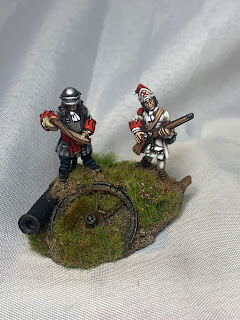
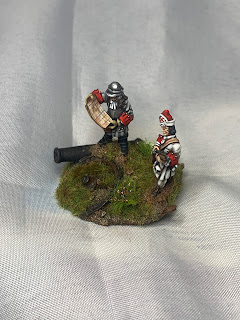
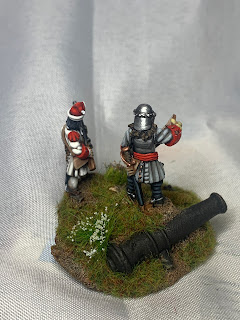
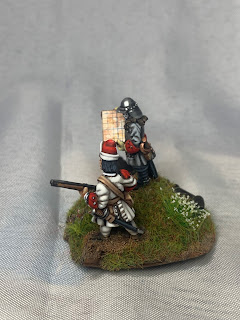
Hello guys, this is the same blog entry I have done for Helion & Company blog
This post is some kind of review of Bruno Mugnai's excellent book : WARS AND SOLDIERS IN THE EARLY REIGN OF LOUIS XIV VOLUME 4 The Armies of Spain 1659-1688

you can buy it here:
https://www.helion.co.uk/military-history-books/wars-and-soldiers-in-the-early-reign-of-louis-xiv-volume-4-the-armies-of-spain-1659-1688.php?sid=748f5d4ace837638de79a074ca583d56
If you are interested in military of XVII c. This books is definitely for you, Helion has produced for the first time in the world, a book dealing with the last Tercios of Habsburg Spain, and it does not disappoint!
Bruno has done (as he usually does) a fantastic job with this volume, it is a long book, with more than 360 pages, full of maps, pictures, paintings, color plates, flags, orders of battle...
It is structured as follows,
1. Spain, or ‘the Resiliance’
With the structure of the Spanish Monarchy, territories, economy, personalities, politics, military situation...
2. Soldados del Rey
The different armies, nations of the Spanish empire, types of troops.
3. Spanish Warfare
Strategies, battles, campaigns, etc.
4. Uniforms, Equipment and Flags
Well, The most complete description of this subject in English :)
Appendix I: Spain Orders of Battle
Appendix II: List of Tercios, Trozos and Regiments, 1659–1688
The Spanish Army of Charles II Habsburg “The Bewitched” (1665-1700) was not the army that had dominated the European battlefields in the first decades of the century… Decades of uninterrupted war, famines, bankruptcy and diseases had decreased Spain’s ability to field and train soldiers in the same numbers of Philip IV, but despite the evident decadency, The Spanish tercios, with the inestimable aid of his allies, mostly held their ground in the face of a much stronger French army during 30 years of almost permanent aggression, at the cost of some territories and cities in Flanders and the loss of Franche Comté, but The Spanish Empire survived almost intact until the next dynasty and War of Spanish Succession.
This army (or theatre of operations) have been neglected in our wargaming world until very recent times, even in Spain, but thanks to the effort of several publishers and historians including the the new book on this subject by Helion Publishing and Bruno Mugnai, the interest in late XVII century and particularly Spain in this era, is increasing.
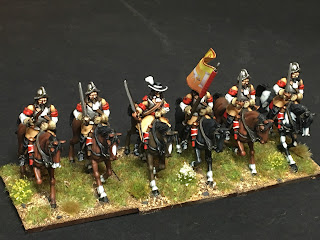
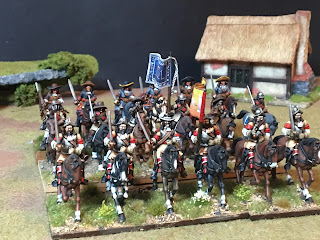

(Tercio of Toledo, "Old Blues")

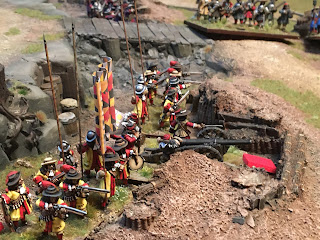

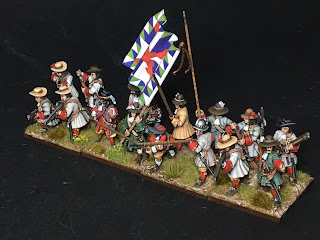
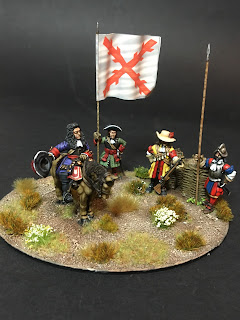

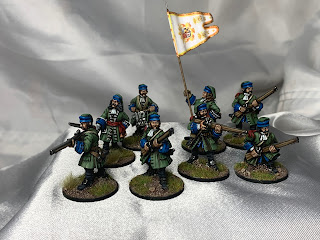
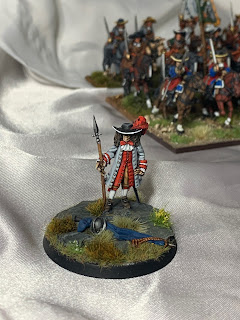
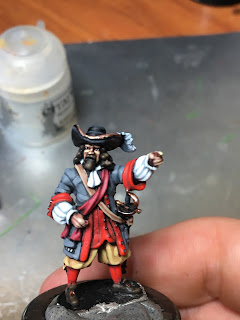
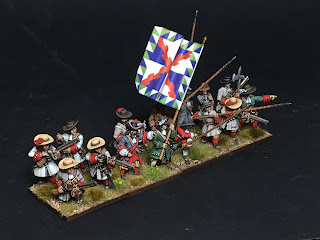
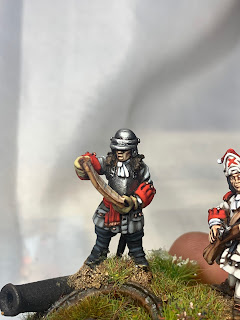
(mixture of figures; Firelock games Spanish officer with Front Rank converted miniatures)
Spain had in these times three (four If we include the Army of Extremadura until 1668) standing armies, the Army of Flanders, the Army of Milan and the Army of Catalonia, apart from smaller armies and garrisons in African “presidios” , Naples, Sicily, Sardinia and the Americas.
The most professional and trained army was the veteran Army of Flanders, active from 1567, it numbered 62.500 men in 1668, at the end of the War of Devolution, 48.000 men in 1675 during Franco Dutch War, and even during the League of Augsburg War, the Spanish army of Flanders fielded 25.000 men in 1690 and 15.000 in 1695.
We can conclude that the French would have overran the Dutch Republic in 1673 without the aid of the Army of Flanders.
In Milan, the Spanish maintained between 10.000 and 20.000 (at its peak) during the last quarter of the century, and was the backbone of the allied army during the League of Augsburg War, aiding the Duke of Savoy, along the expeditionary forces of the Holy Roman Empire. Moreover, the army of Milan provided most of the artillery to the allies during that conflict.
In Catalonia the Spanish had the weakest of the three field armies, composed by only 5 veteran tercios … and some cavalry trozos (regiment equivalent), the rest of the army was of lesser quality recruits, and their performance in battle was worse than in Flanders and Italy. That was because of the secondary role of that front during all the wars, considered secondary by both, the French and the Spaniards.
I think this army has been mistreated by historiography until very recent times, in part thanks the “new“ (and current) Bourbon dynasty in Spain, who wanted to present themselves as the modernizers of an outdated and inefficient Habsburg military structure, but this claim was not true, despite the propaganda, which lasted until the last century.
Although most field battles were won by the French in all late XVII century wars, the allies and the Spanish in particular had successes too in all these wars, we can just mention a few like:
-Battle of Dendermonde 1667
-Siege of Bellegarde 1673
-Battle of Maureillas/Morellás 1673
-Battle of Saint Dennis (draw) 1678
-Reconquer of Sicily 1678
-Siege of Gerona 1684
-sieges of Ceuta, Melilla, Oran… against the Moors and Algerians
-French invasion of Catalonia 1689
-Siege of Casale 1695

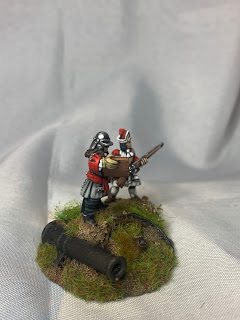
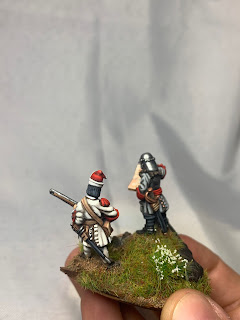
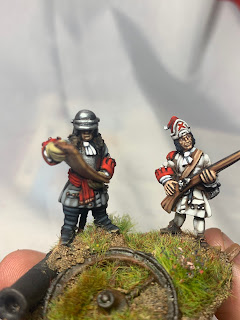
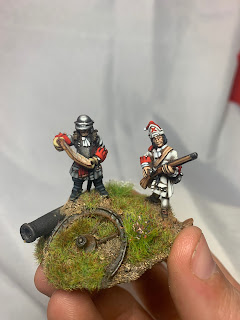
(North Star 1672 musketeer, Foundry engineer with Warhammer head)
Apart from that, the Spanish role in the Allied war effort was inmense, and often neglected. As Flanders was the main front of all the conflicts, both French and Spanish invested there their best units, but also had to withdraw thousands of men and resources in order to assist fronts in Catalonia and Italy thus relieving pressure on the Netherlands. Moreover, several German regiments and auxiliaries were paid by the Spanish crown.
In terms of logistics and artillery, The Spanish army of Milan supplied the Allies in Savoy with the vast majority of the artillery train in the different campaigns during the League of Augsburg War, especially during the siege of Casale Monferrato in 1695.
In Flanders, the Spanish supplied the English Expeditionary army in 1678 with hundreds of charts and artillery, as the English had no logistical system available to that campaign.
Spanish cavalry was highly regarded by both , friends and enemies, in general terms it was superior to French cavalry, and during Franco Dutch war and League of Augsburg War, always fought in the right wing of the Allied army, as this was the place of honour in the battle line. William III and Waldeck made continuous requests for help in terms of cavalry units to the Army of Flanders, in order to relieve his relative weakness in that field, in exchange of Dutch infantry to man the Flemish frontier’s fortresses.

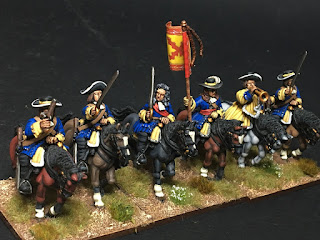
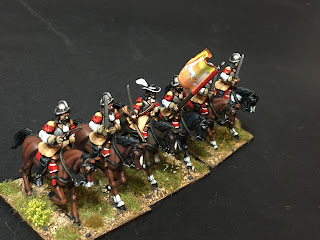
(Tercio of Cavalry of Vaudemont, Flanders, League of Augsburg War and Trozo of Extremadura, same conflict, Catalonia, all Front Rank miniatures)
As you can see, this army is very interesting to paint and play, because you can use it in several conflicts and several locations, Flanders, Alsace and Rhine, Savoy, Sicily, North Africa, and Catalonia. You also can field Spanish tercios in your Allied armies of Franco Dutch War and League of Augsburg War along Dutch, English, German, Austrian or Italian regiments.
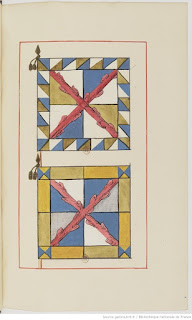
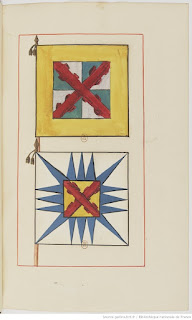
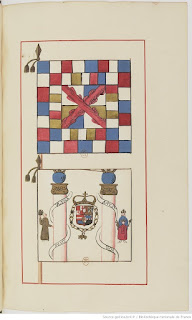
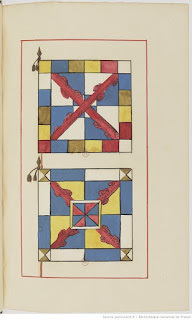
In my opinion is one of the most colourful armies of the period, with uniforms of almost every colour possible (even purple!) also the flags are interesting too, they usually carry the classic Burgundy cross in different backgrounds, from plain white, to intricated geometric forms.
Talking about the miniatures, I have been using a lot of different manufacturers since I started collecting some years ago (more or less in 2013) When I saw for the first time an advertisement of Barry Hilton's Warfare Miniatures and ex Copplestone North Star 1672.
I found out that there were no proper Spanish miniatures in the market a few years ago, except for the short lived "Phoenix Miniatures" XVII Spanish range, which was part of North Star, sadly that range was not complete and was withdrawn... but now North Star 1672 has launched a new range of Spanish troops with their typical long coat with high cuffs and front lapels.
Talking about uniform colours, in Bruno Mugnai's book, you have the DEFINITIVE guide about painting them, because there is an appendix with virtually all of the known Tercios and their uniform if there are records of them.
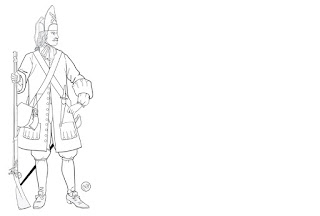
In general terms, Spanish troops in Spain were the most colorful, with a motley collection of colors available. In Flanders it was common to see Spanish troops dressed in grey with red facings, also blue. In Milan, Tercios had a tendency to be dressed in red and yellow. Neapolitans and Aragonese usually wore blue... So there was no fixed parameter, but there were some local trends
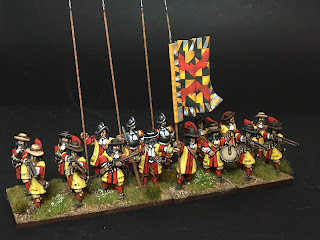
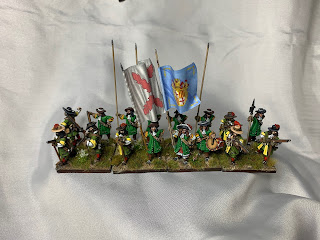
(Tercio “Old Yellows”, one of the 5 veteran infantry tercios in Catalonia, Phoenix Miniatures, some conversions and some custom sculpted miniatures )
Those miniatures are suitable roughly from the War of the Devolution 1667-68, until the League of Augsburg War. But you can also use Front Rank miniatures and Warfare Miniatures for the League of Augsburg War. Also Dixon’s Miniatures and Wargames Foundry are suitable, although smaller in size.
I can't tell what is the BEST range... It depends on the exact conflict you are playing and painting...
If you want to play Portuguese Restoration War and War of Devolution (mid to late 1660') I would go for a mixture of 30 Years War/English Civil War minis and 1670' miniatures like for example, the brand new Bloody Miniatures, Bicorne Miniatures with some Reiver Castings new range of 1670' miniatures, and of course North Star 1672 !!
If you go for Franco Dutch War, my choice would be North Star 1672 and Reiver Castings new range on that conflict. Also Front Rank miniatures to add some variety and officers.

(Front Rank, Warlord games (converted), Northstar/Phoenix Miniatures... Franco Dutch War, Spanish troops in Flanders)
If your choice is League of Augsburg, then go for Warfare Miniatures and Front Rank, they are my favourite for 1690' uniforms. Also some miniatures from War of Spanish Succession would be useful here, for instance Ebor Miniatures, which produces very nice miniatures that fits perfectly in 1690's like their Imperial Cuirassiers, Saxon cavalry, French Dragoons, or Spanish Grenadiers!

(Warfare Miniatures' Officers)
Dixon's Miniatures and Foundry Miniatures are smaller than the previous ranges, and I like bigger figures BUT they are super nice and full of character, some of their miniature show their age ,but I am always happy to mix them in my units or making small dioramas and scenes with them.
I am sorry If I have forgotten some miniature ranges here, but with some conversion, you can use

(Spanish militia unit in Catalonia, mixture of Warfare Miniatures, Warlord Games, Dixon’s…)
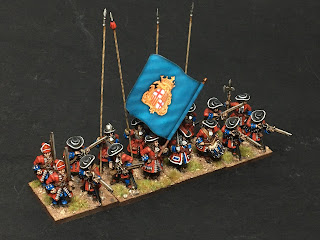
(Tercio of Barcelona, 1696)

(Migueletes, Catalan irregulars, caused the majority of French causalities during the Catalonian campaign of 1695-96)
With all those great ranges, and flags from the internet, books and manufacturers like Adolfo Ramos, Flags of War and such, you can perfectly field a small contingent of Spanish allies to your Dutch or English army.
I hope you have found this little approach to the late Spanish tercios somehow interesting.
Finally, I would like to thank Helion Publishing, Charles Singleton, Bruno Mugnai and Barry Hilton amongst many others who, with their work and research, help to increase people's interest in this exciting period of history and this hobby.
Jose Maria Cagiga Mata
Bibligraphy:
- Bruno Mugnai : WARS AND SOLDIERS IN THE EARLY REIGN OF LOUIS XIV VOLUME 4 The Armies of Spain 1659-1688 (HELION)
-Maffi, Davide. Los últimos tercios. El Ejército de Carlos II. 2020
- (various) Desperta Ferro magazine: Los Tercios (VI). 1660-1704. 2019
-Espino López, Antonio. Las Guerras de Cataluña 1652-1700. 2014
- Giancarlo Boeri, Jose Luis Mirecki, Jose Palau, Robert Hall .Spanish Armies in the War of the League of Augsburg, 1688-1697. 2011
- Lynn, John A. The Wars of Louis XIV, 1667-1714. 1999